Integrating Emotional Intelligence, Values & Conscious Awareness into Education
The Institutions & Schools Partnership Cell of Chetna Uday Mission works with schools, educational institutions, NGOs, and academic bodies to integrate structured emotional education, consciousness-based learning, and value development into existing systems.
This cell bridges the gap between academic excellence and emotional resilience.
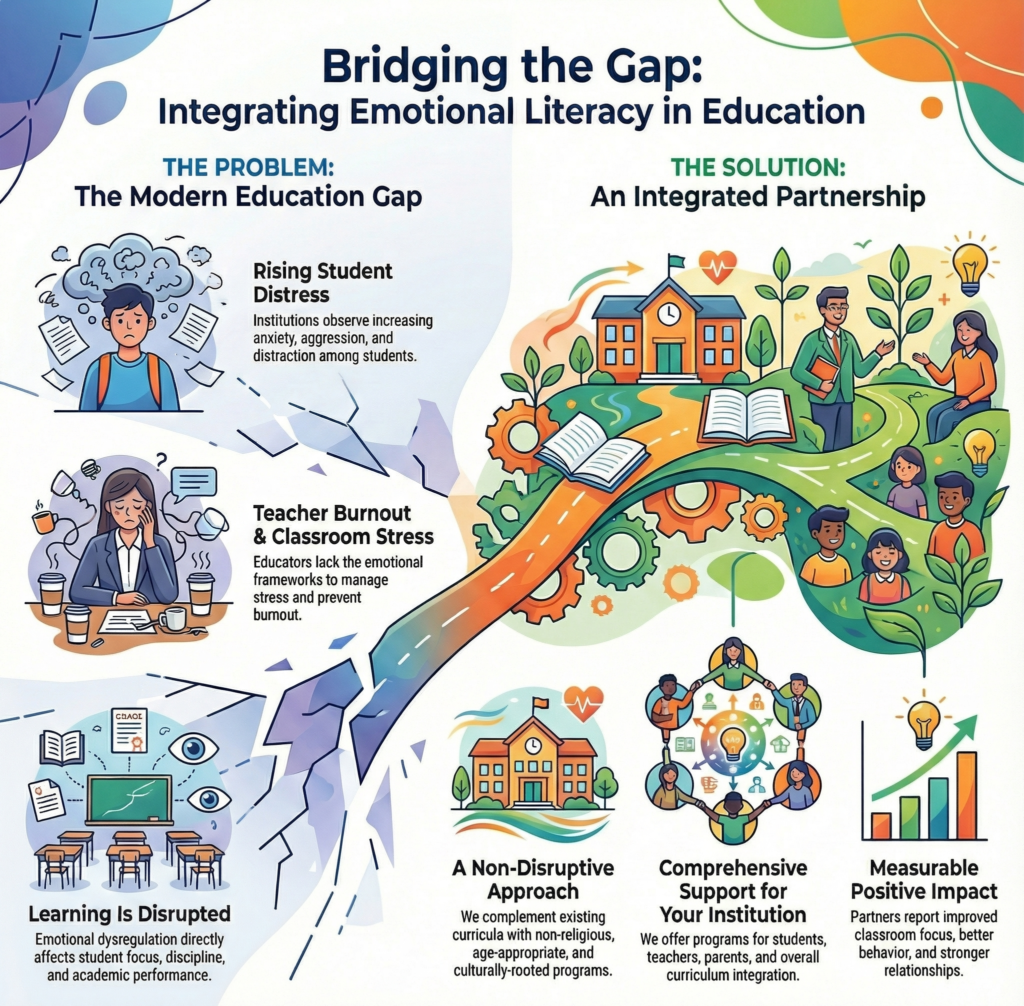
What We Offer Institutions
Program Formats
Institutions may choose from:
- Orientation workshops
- Ongoing weekly or monthly programs
- Teacher training modules
- Pilot programs with assessment
- Long-term institutional partnerships
Programs can be implemented:
- During school hours
- As enrichment modules
- As part of wellbeing initiatives
Measurable Impact Areas
Institutions often observe:
- Improved classroom behavior and focus
- Reduced disciplinary incidents
- Better emotional regulation in students
- Stronger teacher–student relationships
- Improved learning environments
Impact is gradual, observable, and sustainable.
Alignment with National Vision
The work of this cell supports:
- Holistic education goals
- Emotional wellbeing in youth
- Value-rooted citizenship
- Long-term social stability
It aligns with the broader vision of nation-building through conscious education.
Who Can Partner With Us
- Schools (Primary to Senior Secondary)
- Colleges and universities
- Educational trusts
- NGOs and foundations
- Academic and research institutions